Lorem ipsum dolor sit amet, consectetur
Knowing Exactly What You Are Dealing With
Rat droppings are dark, spindle shaped, and about half an inch long, and the Contra Costa Mosquito and Vector Control District notes that finding them usually signals significant rat activity nearby. Rat Busters Rodent Proofing offers rodent inspections that read those signs, along with rub marks, gnawing, and nesting, to map where rodents live and how they get inside. We inspect properties in Antioch, CA and nearby Lafayette, Danville, and San Ramon, along with homes throughout Contra Costa County.
A good plan starts with an accurate picture, which is why our inspections are free and never rushed. Our 15+ years of rodent work guide a careful look at the roof, attic, crawl space, garage, and exterior, followed by a clear explanation of what we found. You will know the species involved, the entry points, and any damage before deciding anything. Schedule through our contact page, and we will set up a visit at a time that works for you.
Properties We Inspect for Rodent Activity
Exterior Perimeter Inspection
The outside of your home tells us how rodents approach it. We walk the foundation, fence lines, and planting beds looking for burrows, droppings, hollowed fruit, and travel paths, noting where outdoor activity connects to openings in the structure.
Roof and Attic Inspection
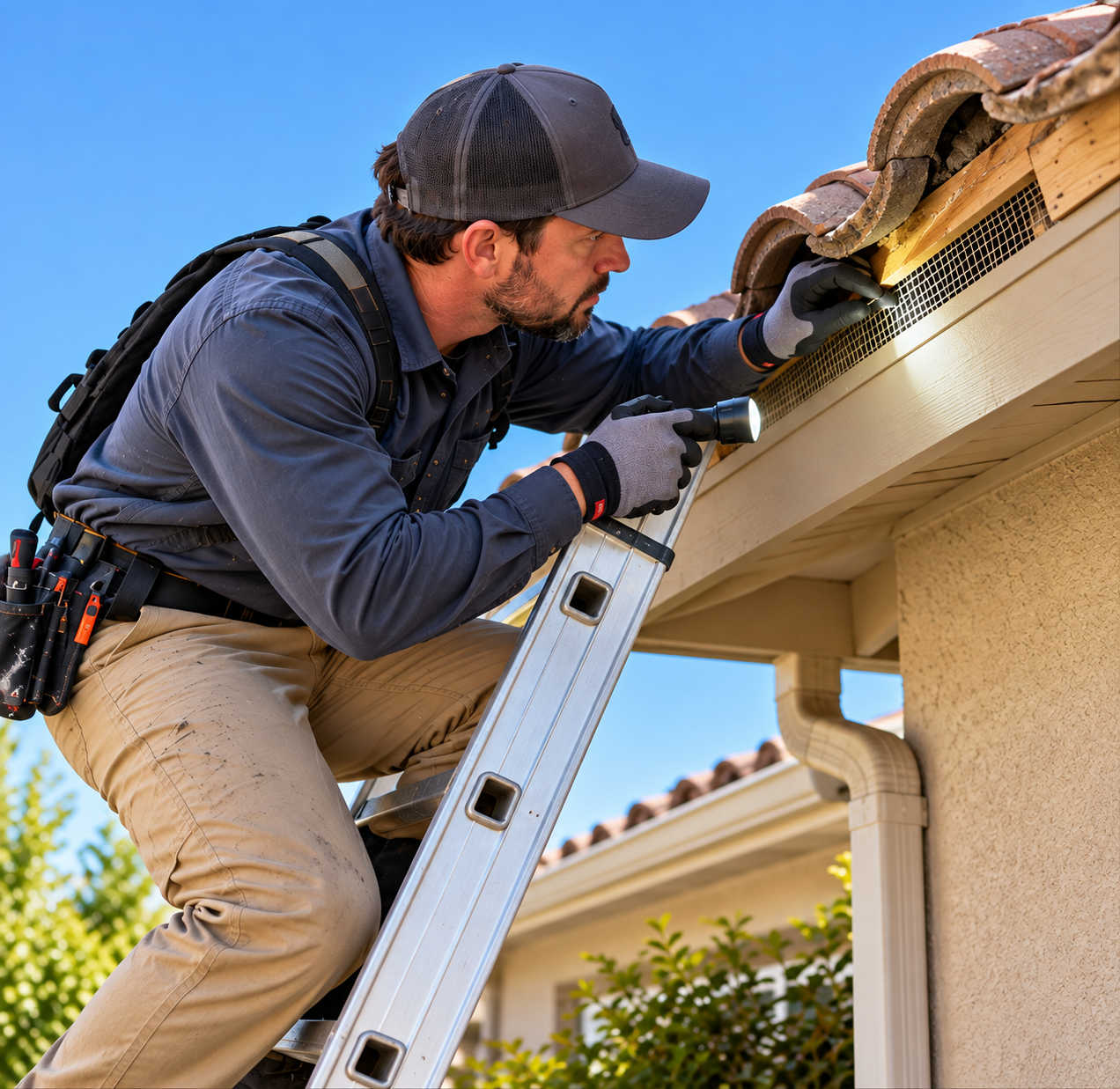
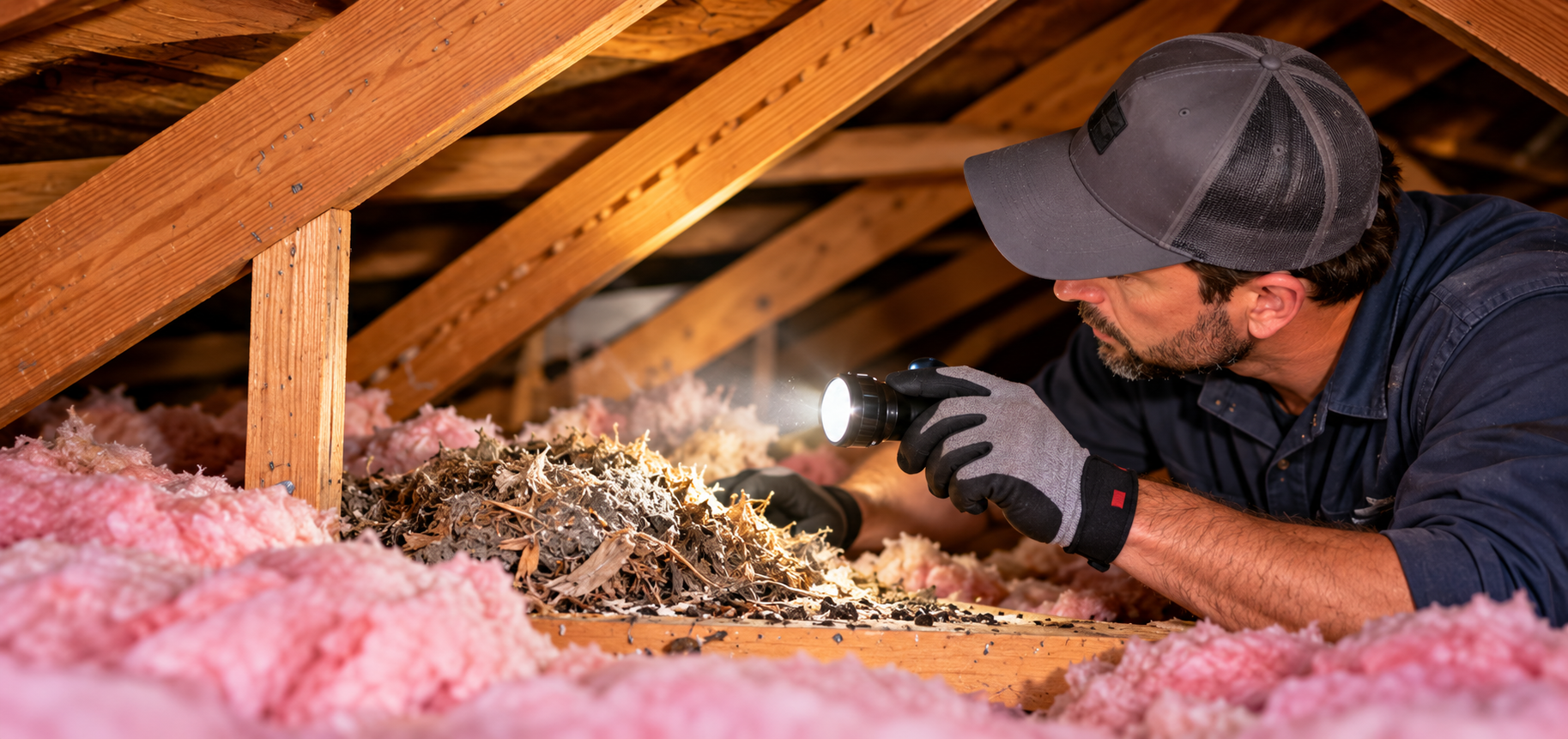
Roof rats often enter high and settle in attics. We check rooflines, vents, eaves, and tile ends from outside, then examine the attic itself for droppings, nesting, runways, and any damage to insulation, ducts, and wiring along the way.
Crawl Space and Foundation Inspection
Under-floor spaces reveal activity that rarely shows up in living areas until it becomes serious. We inspect crawl space access doors, foundation vents, burrows, and the plumbing and ducts below your floors for signs of rodents and damage.
Garage and Interior Inspection
Garages, kitchens, laundry rooms, and closets often hold the first visible signs of an infestation. We look behind appliances, under sinks, inside lower cabinets, and along baseboards for droppings, gnaw marks, and small gaps that lead into wall voids.
Contributing Conditions Review
Food sources, water, and shelter keep rodents interested in a property. We identify fruit trees, pet food, compost, woodpiles, dense ivy, and vegetation touching the roof, explaining which conditions are drawing rodents in and how to reduce them.
Damage Assessment
Rodents leave chewed wiring, torn ducts, soiled insulation, and damaged vent screens behind. We document the damage we find, explain which issues need attention first, and recommend licensed trades whenever the needed repairs fall outside the scope of rodent work.
Benefits of Rodent Inspection
A Clear Picture Before You Spend
An inspection shows what is really happening before you commit to any work. You learn the scope of the problem, the species involved, and the repairs that matter most, so decisions are based on facts instead of guesswork.
Early Detection Saves Trouble
Catching rodent activity early keeps populations small and damage limited. An inspection can reveal a developing problem months before you hear scratching or find droppings, which makes the eventual solution faster, simpler, and far less disruptive to complete.
Accurate Species Identification
Roof rats, Norway rats, and house mice behave differently and enter homes in different ways. Knowing which one you have shapes every step that follows, from trap type and placement to the specific openings that should be sealed first.
Honest, Prioritized Recommendations
Not every finding needs immediate action. A thorough inspection separates urgent issues from minor ones, giving you a practical order of priorities so you can plan the work and your budget calmly without feeling pushed into anything unnecessary.
Peace of Mind When Buying or Selling
Rodent activity can surface during real estate transactions and complicate negotiations. An inspection gives buyers and sellers a clear understanding of a property's condition, helping everyone move forward with more confidence and fewer surprises when closing time arrives.
A Baseline for the Future
Documented findings create a reference point you can compare against in the years ahead. If new activity ever appears, you and our team can quickly see what changed since the last visit, making any follow-up work more targeted and efficient.
BENEFITS 1
Insert content
BENEFITS 2
Insert content
BENEFITS 3
Insert content
Start With Answers, Not Assumptions
Every effective rodent solution begins with understanding the problem, and that understanding comes from a careful look at the whole property. Rat Busters Rodent Proofing gives homeowners in Antioch, CA thorough inspections that identify the species, the entry points, and the damage, then explains it all in straightforward terms. There is no cost and no pressure, just the information you need to make a confident decision about your home. When you are ready for real answers, visit our contact page to request your free rodent inspection, and mention our website to save 10% on any rodent control service you choose.
FAQ's
Got Questions? We’ve Got Answers.
What does a rodent inspection include?
A full inspection covers the exterior perimeter, roofline, attic, crawl space, garage, and key interior areas. We look for droppings, rub marks, gnawing, nests, burrows, and entry points, then clearly explain the species, conditions, and damage we found.
Should I get an inspection if I have not seen rodents?
It is worth it, especially if you hear noises at night, notice odors, or live near open land, fruit trees, or ivy. Rodents stay hidden, so an inspection often finds activity well before anyone in the home sees a rat or mouse.
What signs should I look for before calling?
Common signs include droppings, scratching or scurrying noises, chewed materials, nesting debris, greasy rub marks along walls, unusual odors, and hollowed fruit in trees. Any one of these signs is worth a closer professional look before the problem has a chance to grow.
How often should a home be inspected for rodents?
Local vector control experts recommend checking a structure twice a year, since settling, weather, and home projects can open new gaps. Homes with past infestations, fruit trees, or heavy vegetation nearby benefit from that regular schedule most of all.
How long does a rodent inspection take?
Timing depends on the size of the property, attic and crawl space access, and how much activity is present. We always take the time needed to check every area thoroughly rather than rushing through a quick, surface-level walk-around.
Can an inspection tell how long rodents have been there?
To a degree, yes. The age and amount of droppings, the condition of nests, and the extent of damage offer useful clues. Fresh, soft droppings and new gnawing point to current activity, while widespread old debris usually suggests a longer-running problem.
Are inspections from Rat Busters really free?
Yes. Rat Busters Rodent Proofing offers free rodent inspections for properties in Antioch, CA and surrounding areas. You get a clear explanation of what we found and our recommendations, with no obligation to move forward or schedule any service.
What happens after a Rat Busters inspection?
After inspecting your Antioch, CA property, Rat Busters Rodent Proofing walks you through the findings, including species, entry points, and damage. Drawing on 15+ years of rodent work, we recommend a plan and let you decide the next step.