
Lorem ipsum dolor sit amet, consectetur
Closing the Tiny Gaps Mice Count On
A house mouse can slip through a hole just a quarter inch across, and University of California research notes that plastic screening, rubber, vinyl, insulating foam, and wood will not stop one for long. Rat Busters Rodent Proofing provides mouse proofing built around that reality, sealing door gaps, plumbing openings, garage walls, and vent covers with materials mice cannot gnaw through. We serve Antioch, CA and neighboring San Ramon, Danville, and Walnut Creek, along with households throughout Contra Costa County.
Mice test every seam in a home, so our proofing focuses on details that general sealing often skips. Our 15+ years of rodent work guide a careful inspection of kitchens, laundry rooms, garages, and exterior walls, followed by durable repairs matched to each gap. We explain what we sealed and why, and we back the work with a warranty and follow-up. Request your free inspection through our contact page to find out where mice are getting in.
Mouse Proofing Solutions We Provide
Door Sweep and Weatherstrip Upgrades
Worn door sweeps leave gaps that a mouse can squeeze under in seconds. We install heavy-duty sweeps and rodent-resistant weatherstripping on exterior, garage, and side doors, checking the fit so doors still close smoothly without leaving a sliver of daylight.
Under-Sink and Plumbing Gap Sealing
Holes around supply lines and drainpipes under kitchen and bathroom sinks lead directly into wall voids. We close those gaps with metal escutcheons, hardware cloth, or cement patch, removing one of the most common indoor highways mice use.
Garage-to-House Wall Sealing
The wall between an attached garage and your living space often has openings around pipes, wiring, and water heater lines. We seal those penetrations so mice sheltering in the garage cannot travel through the shared wall into bedrooms or kitchens.
Weep Screed and Siding Gap Sealing
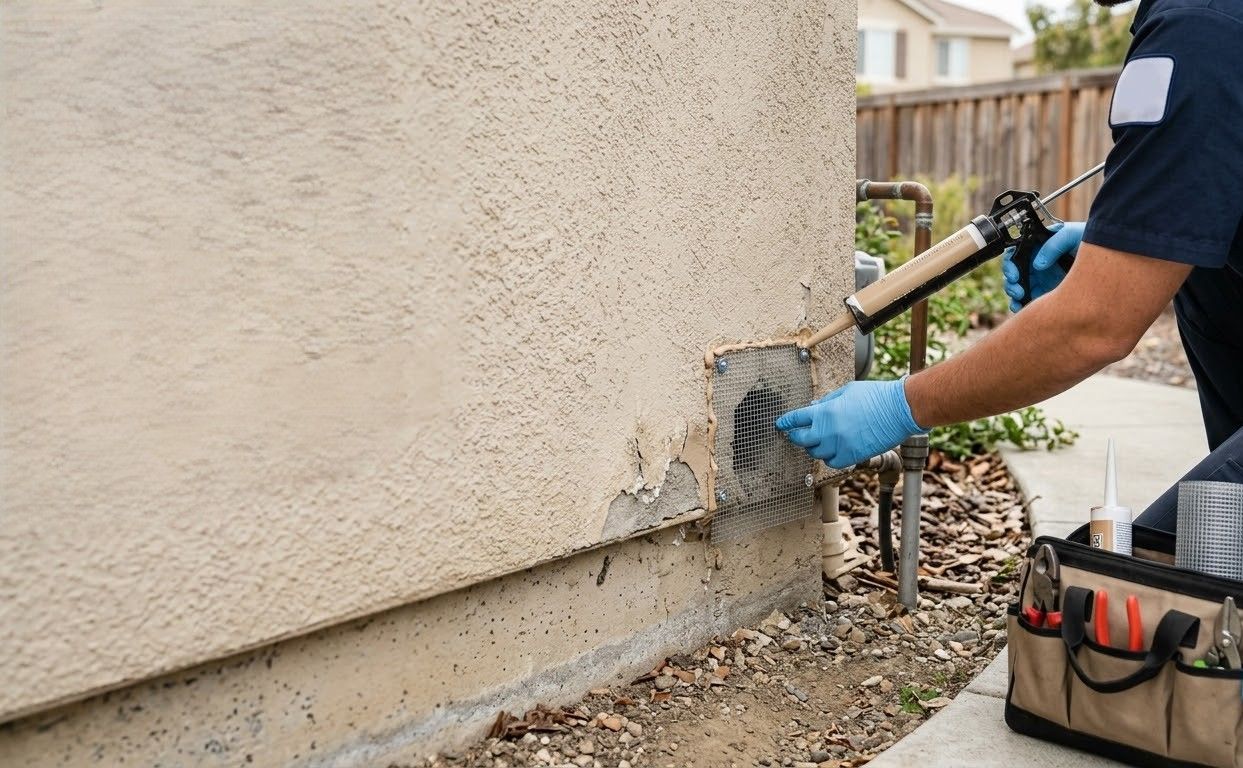
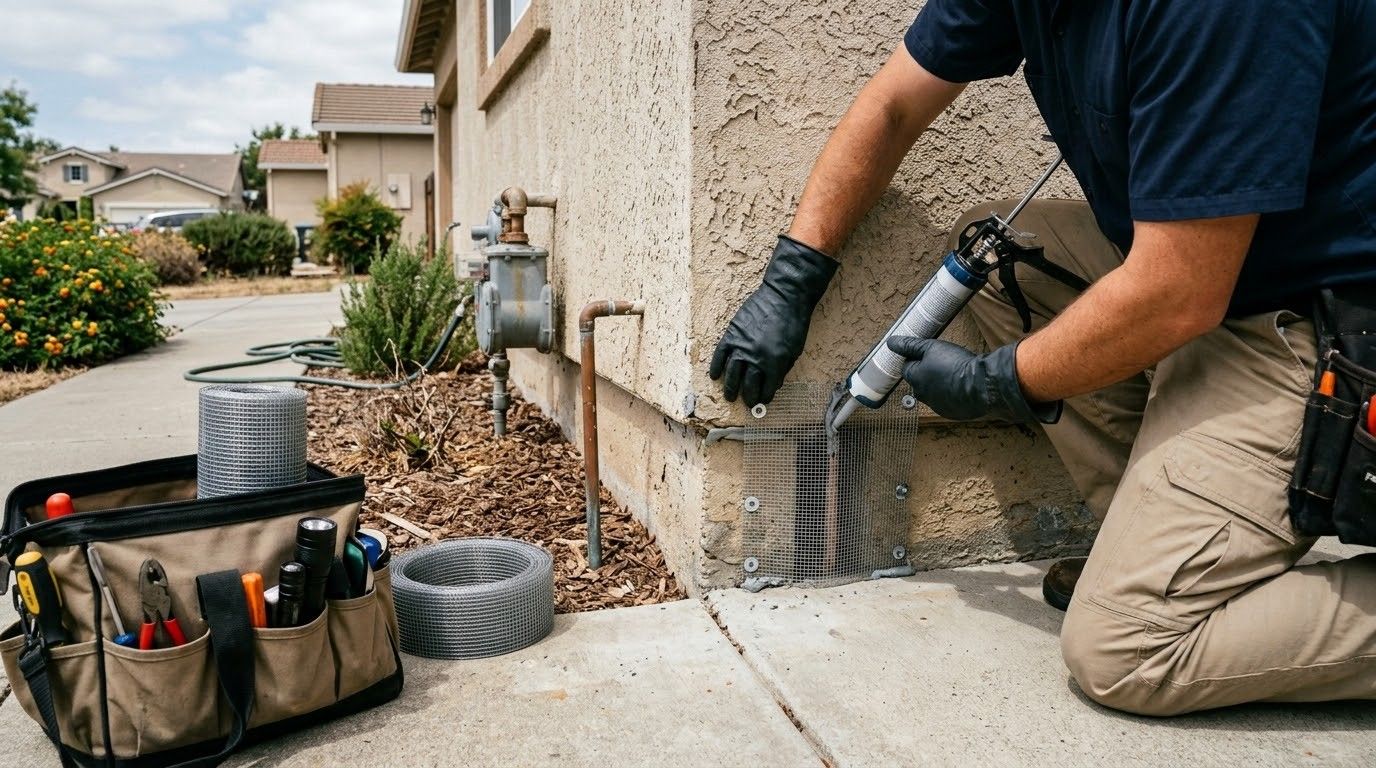
Stucco homes often have small gaps along the weep screed at the base of the wall, and siding can separate at corners. We close these narrow openings with durable materials while preserving the drainage function stucco needs to stay healthy.
Cabinet and Built-In Void Closure
Dead space behind cabinets, bookcases, and built-in shelving gives mice hidden room to nest and travel. We seal the gaps around toe kicks, pipe entries, and cabinet backs, cutting off those protected pathways mice use to move between rooms unseen.
Dryer Vent and Exhaust Cover Screening
Dryer vents, bath fans, and kitchen exhaust hoods end in exterior covers that mice can push past when flaps stick or break. We install rodent guards designed for each vent type, keeping airflow moving while blocking entry at the wall.
Benefits of Mouse Proofing
Small Gaps Finally Closed
Mice exploit the tiny openings most homeowners never notice. Detailed proofing tracks down those quarter-inch gaps around pipes, doors, and vents, closing the pathways that allowed mice to return no matter how many traps you set in the past.
Cleaner Pantry and Cabinets
With entry points sealed, mice lose access to the food storage areas they target first. Pantry shelves, lower cabinets, and drawers stay free of droppings and chewed packaging, so you can stock groceries without worrying about what visits overnight.
Materials That Actually Hold
Foam and caulk may look finished, but mice chew through them quickly. Metal, hardware cloth, and cement repairs stand up to gnawing, giving you results that last for years instead of patches that fail within a single season.
Fewer Traps Indoors
Once mice cannot get inside, there is no need to keep traps under sinks or behind appliances. Your home feels cleaner, and pets and children are not exposed to equipment tucked into corners of the kitchen or laundry room.
Year-Round Kitchen Protection
Kitchens attract mice through every season, not just in fall. Proofing keeps that pressure outside permanently, so cooler months no longer bring the usual wave of faint scratching in the walls and droppings behind the stove and dishwasher.
A Tighter, Less Drafty Home
The gaps mice use also let in outside air, dust, and insects. Sealing them improves how snugly doors close and reduces drafts, which can make rooms more comfortable while taking a little pressure off your heating and cooling.
BENEFITS 1
Insert content
BENEFITS 2
Insert content
BENEFITS 3
Insert content
Give Mice Nowhere Left to Squeeze Through
Mice make a living out of finding the one gap everyone else overlooked, which is why careful proofing matters more than any trap. Rat Busters Rodent Proofing helps homeowners in Antioch, CA track down those small openings and close them with materials built to last, from door sweeps and vent guards to plumbing seals and cabinet voids. We explain what we find, recommend only what your home needs, and leave the timing up to you. When you are ready for a kitchen and garage that stay mouse-free, reach out through our contact page to schedule a free proofing inspection with our team.
FAQ's
Got Questions? We’ve Got Answers.
How small of a hole can a mouse fit through?
Mice can pass through an opening about a quarter inch wide, roughly the diameter of a pencil. Because their skulls are small and bodies flexible, any gap that fits a mouse's head is usually large enough for the whole animal.
Why does expanding foam fail against mice?
Foam is easy for mice to chew, and some even use the pieces as nesting material. Foam can fill gaps behind a stronger barrier, but on its own it offers little resistance, which is why metal or cement materials belong on the outside.
Where do mice most often get into homes?
Common entry points include gaps under doors, openings around pipes and wiring, foundation vents, weep screeds on stucco walls, and damaged vent covers. Garages are frequent starting points, since mice move from there into the house through shared walls.
Can mice get in through dryer vents?
Dryer vents with stuck or broken flaps let mice climb in toward the laundry room. A rodent guard over the exterior opening blocks that route while still letting lint and air escape, so the dryer continues working safely.
Is it worth sealing mouse gaps myself?
Homeowners can replace worn door sweeps and fill obvious holes, but many openings hide under decks, inside cabinets, or high on walls. A professional inspection finds the full set of entry points, so small DIY fixes are not undermined by missed gaps.
Do door sweeps really stop mice?
In most cases, a properly fitted, heavy-duty sweep blocks one of the easiest mouse entry points. Cheap vinyl or brush sweeps wear out quickly and can be chewed, so rodent-resistant sweeps with metal components deliver much better long-term results.
Does Rat Busters seal gaps inside cabinets and under sinks?
Yes. Rat Busters Rodent Proofing seals interior plumbing gaps, cabinet voids, and garage walls in Antioch, CA homes, not just exterior openings. Our 15+ years of rodent work show that mice often travel inside walls after slipping past a single exterior gap.
How does Rat Busters confirm mouse proofing worked?
Rat Busters Rodent Proofing follows up after sealing homes in Antioch, CA, checking for fresh droppings, tracks, or gnawing near every treated area. If activity continues within our warranty terms, we return to locate and seal the remaining opening.