Lorem ipsum dolor sit amet, consectetur
Every Opening Matched With the Right Repair
Local vector control guidance calls for sheet metal collars around pipes on wooden walls, cement patch in stucco and brick, and sheet metal edging along door bottoms, because rodents gnaw through anything softer. Rat Busters Rodent Proofing follows that approach for entry point sealing, fitting each opening with the material that suits its location and surface. We seal homes and commercial buildings in Antioch, CA as well as Oakland, Brentwood, and Lafayette, along with properties throughout Alameda County.
Sealing only works if every gap is found, so each project starts with a free inspection that traces droppings, rub marks, and gnawing back to the openings rodents use. With 15+ years in rodent work, we know the spots contractors and settling tend to leave behind. Each repair is finished neatly, backed by our warranty, and checked on follow-up visits. Mention our website when you schedule to save 10% on rodent control services, then book through our contact page.
Rodent Entry Points We Locate and Seal
Pipe and Conduit Penetration Sealing
Gas lines, water pipes, and electrical conduit often pass through oversized holes in exterior walls. We fit sheet metal collars on wood surfaces and pack cement patch around penetrations in masonry, closing the gap completely without stressing the pipe or conduit.
Stucco and Masonry Crack Patching
Cracks and chipped sections in stucco, brick, and block walls give rodents a starting point to gnaw wider. We patch those areas with cement-based materials that bond to the surface, blend reasonably with the finish, and resist chewing long term.
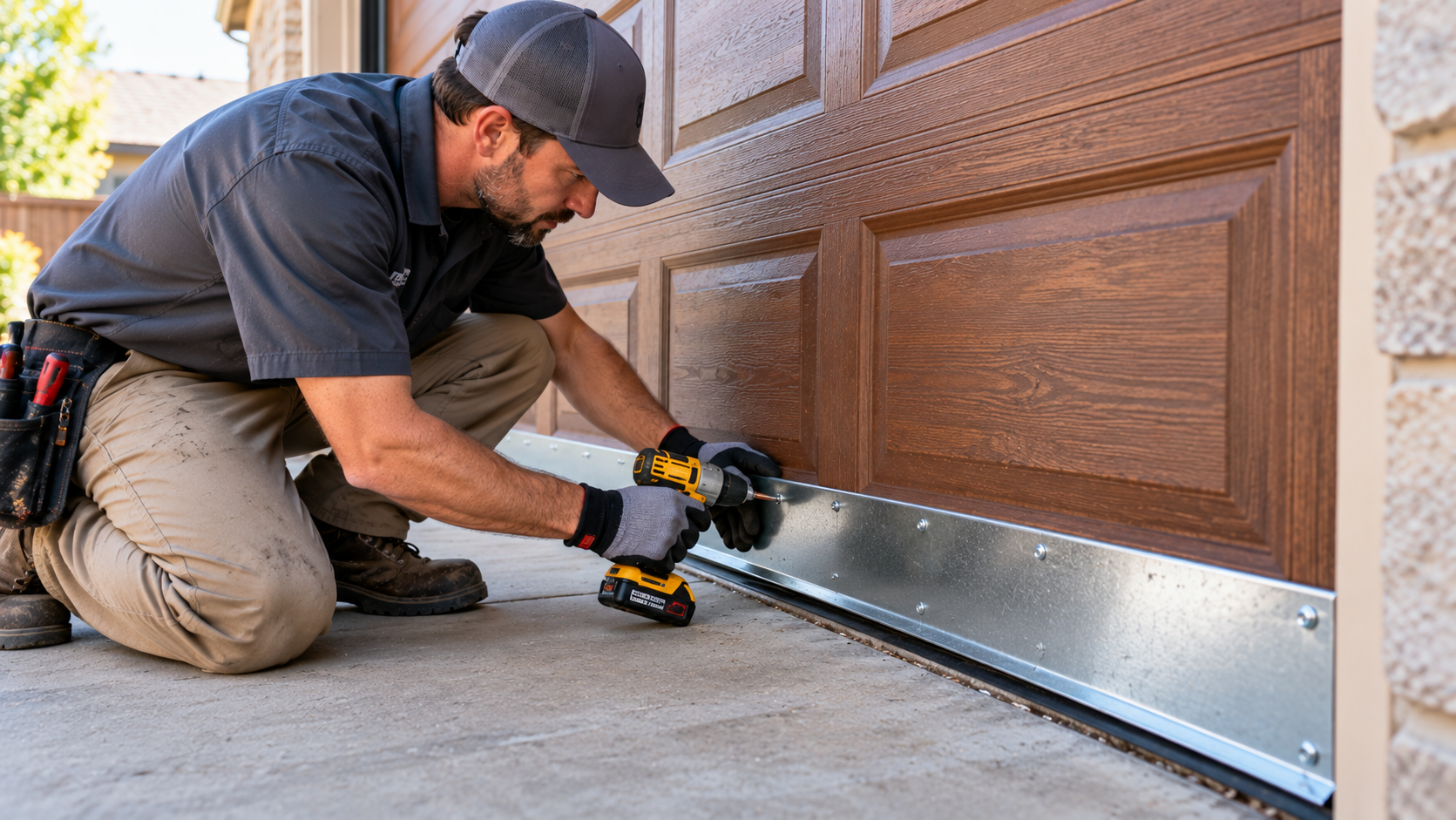
Door Bottom Sheet Metal Edging
Wooden doors to garages, sheds, and utility rooms get gnawed at the bottom corners until a gap opens. We install sheet metal edging along the lower portion of the door, protecting the wood so rodents cannot chew their way underneath again.
Addition and Remodel Seam Sealing
Where a new addition meets the original house, small gaps often remain along rooflines, foundations, and siding joints. We inspect those seams closely and seal the voids that construction crews left behind, which rodents are quick to find.
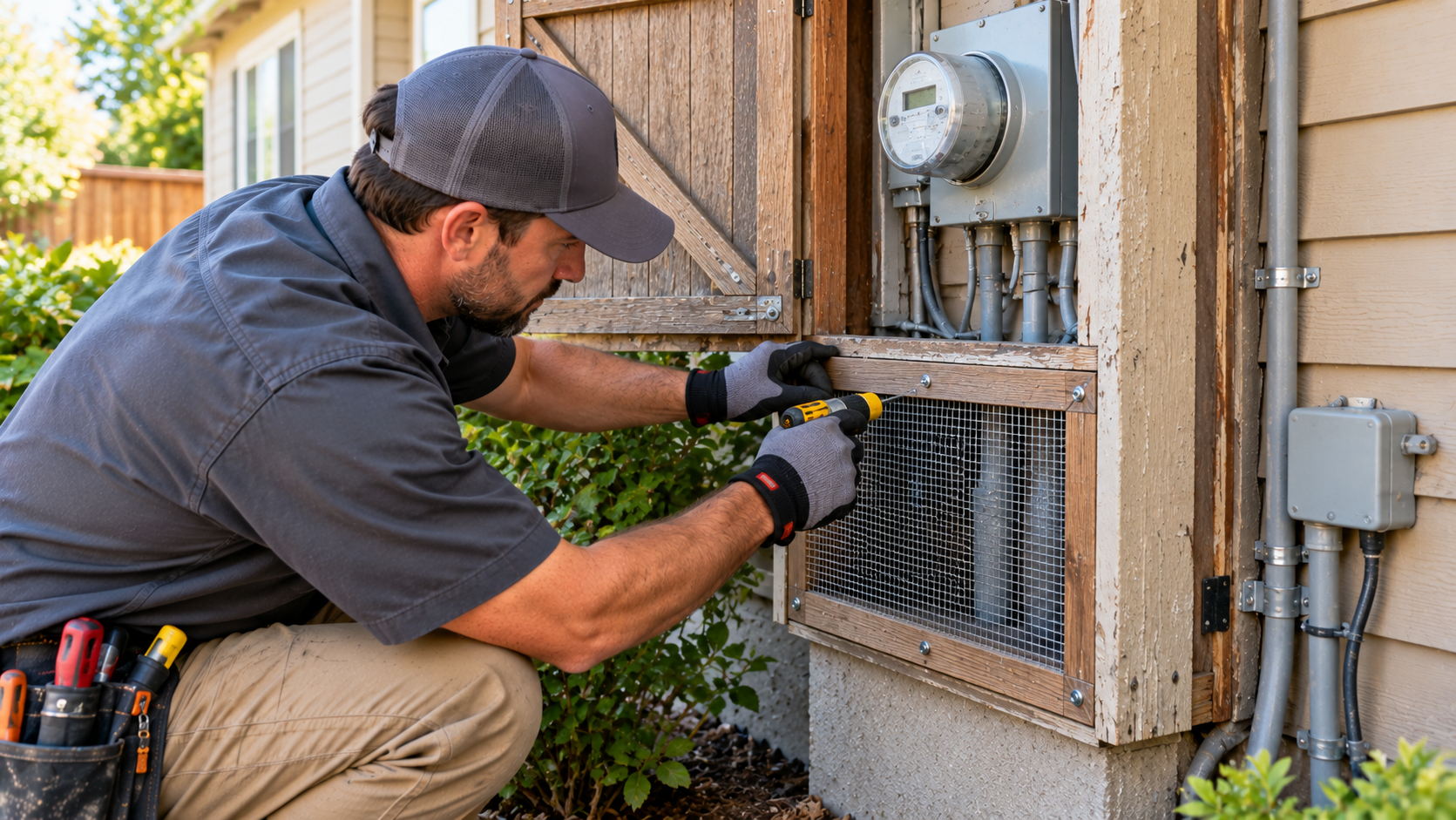
Meter Box and Utility Closet Sealing
Older wooden meter boxes and exterior utility closets frequently have loose doors and open bases. We close gaps around these enclosures, screen the openings rodents use, and secure the doors so these tucked-away spaces stop sheltering nesting activity near the house.
AC Line Set and Cable Entry Sealing
Air conditioning line sets, satellite cables, and internet lines are often installed through holes much larger than needed. We seal around each line with durable materials, removing the gaps that installers routinely leave unfinished on the exterior wall.
Benefits of Entry Point Sealing
Matched Materials for Every Surface
Wood siding, stucco, brick, and metal each call for different repair methods. Matching the material to the surface gives each seal the best chance of holding for years, rather than relying on one product that works well in only a few places.
Contractor Gaps Finally Closed
Plumbers, electricians, cable installers, and roofers regularly leave small openings behind after their work. Sealing those forgotten gaps closes entry points you may not even know exist, many of them created years before you first noticed any sign of rodents.
Less Air and Dust Infiltration
Every open penetration lets outside air, dust, and insects drift indoors along with rodents. Closing them tightens your home, which can reduce drafts near exterior walls and help indoor spaces stay a bit cleaner, quieter, and more comfortable.
Longer-Lasting Results
Repairs made with metal and cement hold up against gnawing, weather, and time far better than caulk or foam. Durable sealing means fewer repeat repairs and less chance that rodents reopen the same hole a few months later.
Clear Understanding of Your Home
A detailed inspection shows exactly where rodents have been getting inside and why. You come away knowing the vulnerable spots on your property, which helps you watch for changes and plan future projects without accidentally reopening old problems.
Protection for New Improvements
Fresh landscaping, recent remodels, and new equipment all deserve protection from gnawing and nesting. Sealing entry points preserves the investments you have made in your home, keeping rodents from damaging the insulation, wiring, and finishes you just paid to install.
BENEFITS 1
Insert content
BENEFITS 2
Insert content
BENEFITS 3
Insert content
Shut Every Door Rodents Were Using
Rodents only need one overlooked opening to keep coming back, which is why careful, material-matched sealing makes such a difference. Rat Busters Rodent Proofing helps property owners in Antioch, CA find and close every entry point, from pipe penetrations and stucco cracks to remodel seams and utility closets. We show you what we found, explain which repairs matter most, and leave the pace of the project in your hands. If rodents keep finding their way inside despite your efforts, request a free inspection through our contact page and let our team pinpoint the openings that are still letting them through.
FAQ's
Got Questions? We’ve Got Answers.
How do you find rodent entry points?
We trace droppings, greasy rub marks, gnaw marks, and worn paths back to the openings rodents use, checking the roof, attic, crawl space, and exterior walls. Fresh signs near a gap usually confirm it is an active entry point.
Why use sheet metal collars around pipes?
Sheet metal resists gnawing and conforms neatly around pipes on wooden walls, where cement patch would not bond well. Collars close the oversized hole surrounding the pipe without restricting movement, keeping both the pipe and the seal in good condition.
Can I just use caulk to seal rodent holes?
Caulk works for tiny cracks where rodents are not actively chewing, but it will not stop determined rats or mice. For true entry points, pairing hardware cloth or sheet metal with sealant gives a barrier they cannot gnaw through.
How long do entry point seals last?
Seals made with metal and cement materials typically last for many years under normal conditions. New gaps can still appear as homes settle or when contractors add new penetrations, so periodic inspections help keep protection complete over time.
Do home additions create rodent entry points?
Often, yes. The seams where new construction meets the original structure along rooflines, siding, and foundations can leave small hidden voids behind them, and local vector control guidance specifically lists these junctions as common places where rodents get inside.
Will sealing change how my home looks?
Most seals sit in low-visibility areas such as foundations, roof edges, and behind equipment. Materials are cut and fitted neatly, and cement patches can be painted to blend with stucco, so the finished work stays discreet and fits your home.
What areas does Rat Busters inspect for entry points?
Rat Busters Rodent Proofing inspects rooflines, attics, crawl spaces, garages, foundations, and utility penetrations at every Antioch, CA property. Our 15+ years of rodent work help us spot the small, easily missed openings that others commonly overlook during a quick walk-around.
Does Rat Busters warranty sealed entry points?
Yes. Rat Busters Rodent Proofing backs entry point sealing in Antioch, CA with a warranty. If rodents return through a sealed area within the warranty terms, we come back promptly to inspect it, find the cause, and reinforce the repair.